
How to Find a Force-Free Dog Trainer in Dallas
How to Find a Force-Free Dog Trainer in Dallas
If you've started looking for a dog trainer in Dallas, you've probably already noticed there are a lot of options out there. Board-and-train programs, group classes, private sessions, online coaching — and trainers with very different approaches to how they actually work with dogs. Knowing what to look for (and what to avoid) will save you a lot of time, money, and frustration.
Here's what I tell people when they ask me how to find the right trainer.
Start with the method, not the price
Before you look at packages or pricing, figure out what methods a trainer uses. This matters more than anything else. There are two broad approaches to dog training:
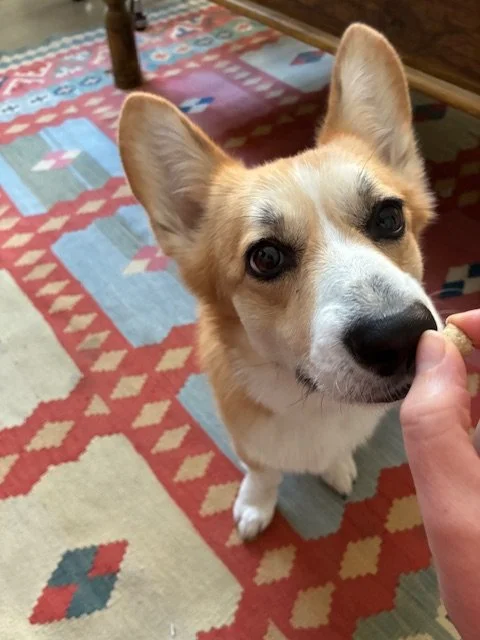
Force-free training — also called positive reinforcement training — works by rewarding behaviors you want so these will happen more often. The dog learns that good things happen when they make good choices. No pain, no fear, no intimidation.
Aversive or correction-based training uses discomfort or punishment to suppress unwanted behaviors. This includes prong collars, shock collars (also called e-collars), alpha rolls, and leash corrections. Beware many of these will call upon your need to be the “alpha of the pack”.
Research consistently shows that force-free methods produce results that are more reliable and longer lasting — and they build a relationship between you and your dog based on trust rather than avoidance. Dogs trained with aversive methods may comply, but they're often doing it to avoid something unpleasant rather than because they understand what you want. That's a very different thing.
When you're researching trainers, look at their website and social media. Do they mention their methods? Do they show videos of how they work? If a trainer doesn't talk about their methods at all, that's worth asking about directly before you book.
Ask about their experience with your specific situation
A good trainer will ask you a lot of questions before they recommend a program. They'll want to know your dog's age, breed, history, what the specific problems are, and what your goals look like. If a trainer jumps straight to a package recommendation without asking about your dog, that's a red flag.
It's also completely reasonable to ask them directly: have you worked with this before? Whether it's a reactive dog, a fearful rescue, a puppy with a biting problem, or a dog who's been through a board-and-train that didn't work — a good trainer will be honest about their experience and whether your situation is a good fit for them.
Be cautious about board-and-train programs
Board-and-train programs — where your dog goes to live with a trainer for several weeks — are appealing because they sound like someone else does all the work. And sometimes they're a good option. But there are a few things to be aware of.
First, not all board-and-train programs are force-free. In fact, many of them use aversive methods precisely because they can suppress behaviors quickly, which looks impressive at pickup day. But those results often don't last once the dog is back in your home, because the dog learned to respond to the trainer in that environment — not to you in yours.
Second, even with a good program, the training doesn't automatically transfer to you. You still need to learn how to communicate with your dog and maintain what was trained. The best programs include significant owner education as part of the package. If a program doesn't include time working with you directly, ask why.
A word about guarantees
If a trainer is offering you a guarantee — "your dog will be fully trained in 2 weeks or your money back," "guaranteed results," "we'll keep training until they're perfect" — I'd encourage you to pause and think about what that actually means.
Dog training doesn't work like fixing an appliance. You're working with a living animal who has a unique history, temperament, and set of experiences, alongside a family who each interact with the dog differently. Results depend on so many variables: how consistent you are at home, how long the behavior has been established, the dog's age, their stress levels, their environment. A responsible trainer will be honest with you about that from the start.
What a good trainer can guarantee is their commitment — to showing up prepared, to using methods that are humane and science-backed, to teaching you the skills you need, and to being honest with you about progress and realistic timelines. That's the kind of guarantee that actually means something.
In my experience, the trainers offering the boldest guarantees are often the ones using the harshest methods. Suppressing a behavior quickly with punishment looks like a "result" — but it's not the same as a dog who genuinely understands what you want and chooses to do it. Be wary of anyone who makes it sound too simple or too fast.
What to look for in Dallas specifically
Dallas has a wide range of trainers, from large franchise operations to independent certified trainers. A few things that will help you narrow it down:
Look for someone who trains in your home. So much of dog behavior is context-specific — a dog who is perfect at a training facility can be a completely different animal in your living room, on your street, or at your front door. In-home training addresses behavior where it actually happens.
Check Google reviews and Yelp for real client experiences. Look for reviews that mention specific results, not just general praise. "Agatha managed to train ME so Harry Potter (my mutt) stopped getting mixed signals! After just a few weeks, the communication with him is clear and I am able to teach him new commands!”
Ask if they offer a consultation or intro call before you commit to a package. A good trainer will want to understand your situation before recommending a program, and it gives you a chance to see if you feel comfortable with them.
Finding the right trainer is worth the effort. The relationship you build with your dog through good training is one of the most rewarding parts of having a dog in your life — and it makes everything else easier, from walks around the neighborhood to having people over to traveling with your dog.
If you have questions about what to look for or want to talk through your dog's situation before booking anything, I'm always happy to help. That's what the intro call is for.
Agatha Weisz is a Certified dog trainer based in Dallas, TX. Hound Habits offers in-home and virtual dog training across Dallas — including Preston Hollow, Highland Park, Lakewood, Oak Cliff, Uptown, and East Dallas. Book a session here.
